Data in MacOS
04
2024
Data privacy has become a significant concern, especially as more people rely on devices like MacBooks, which Apple claims prioritize user privacy.
However, recent incidents—such as a breach involving Siri eavesdropping on users—raised questions about these claims. Motivated by these concerns, we conducted research using methods like GUI ripping and reverse user journey analysis to uncover the complexities of accessing personal data on MacOS.
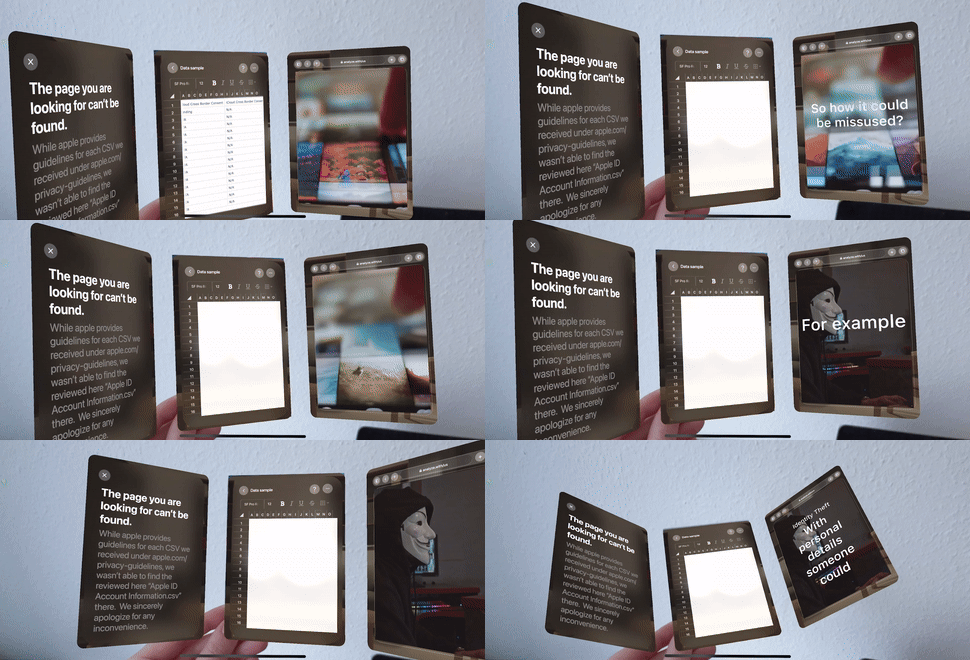
Our findings revealed that the process of retrieving data is long and complicated, contradicting Apple’s promises of transparency. To address this, we developed an augmented reality (AR) experience aimed at offering a more user-friendly way for users to access and understand their data, encouraging greater awareness of their digital footprint.
CONTRIBUTORS:
Elizaveta Mironova
Date:
2024
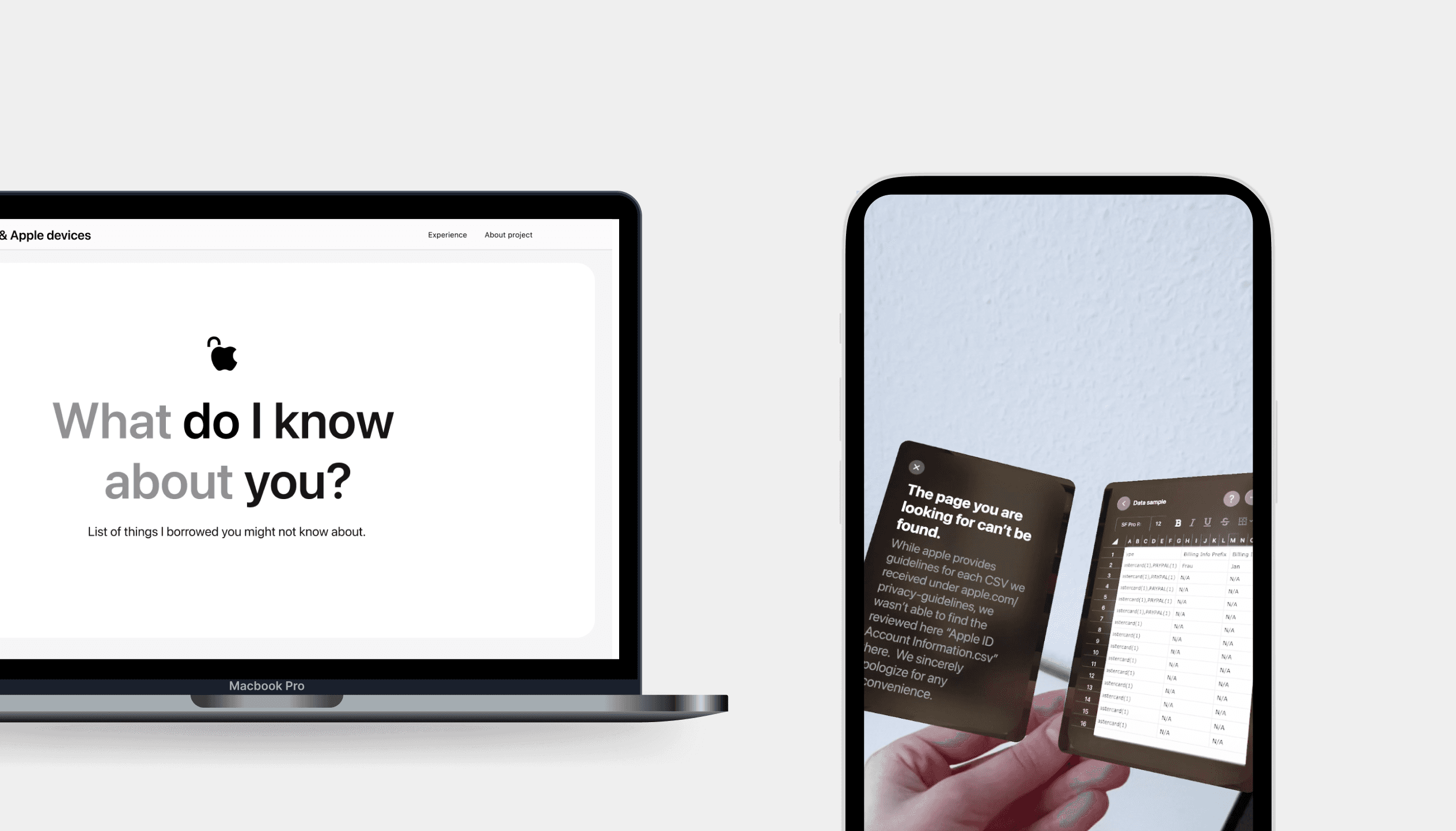
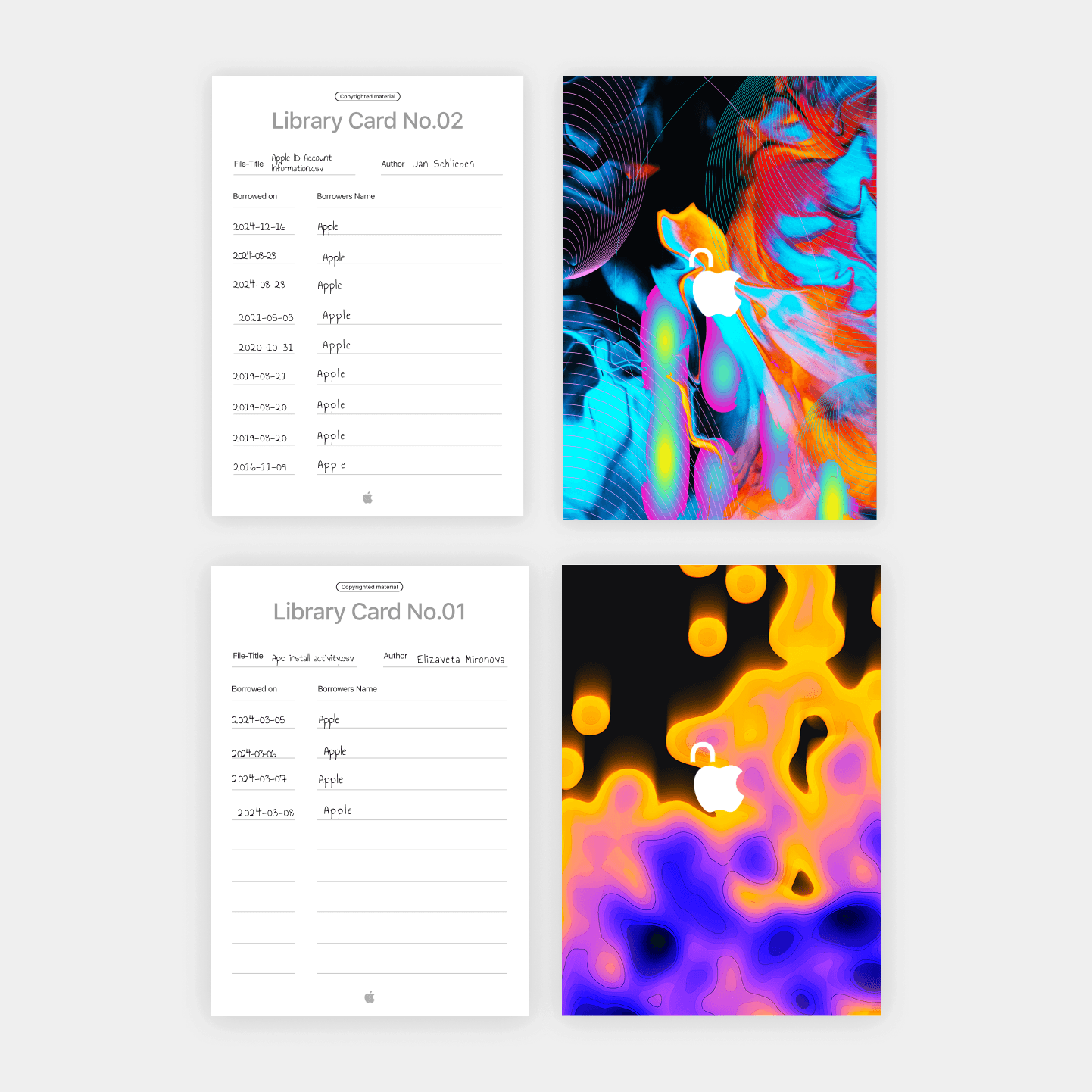
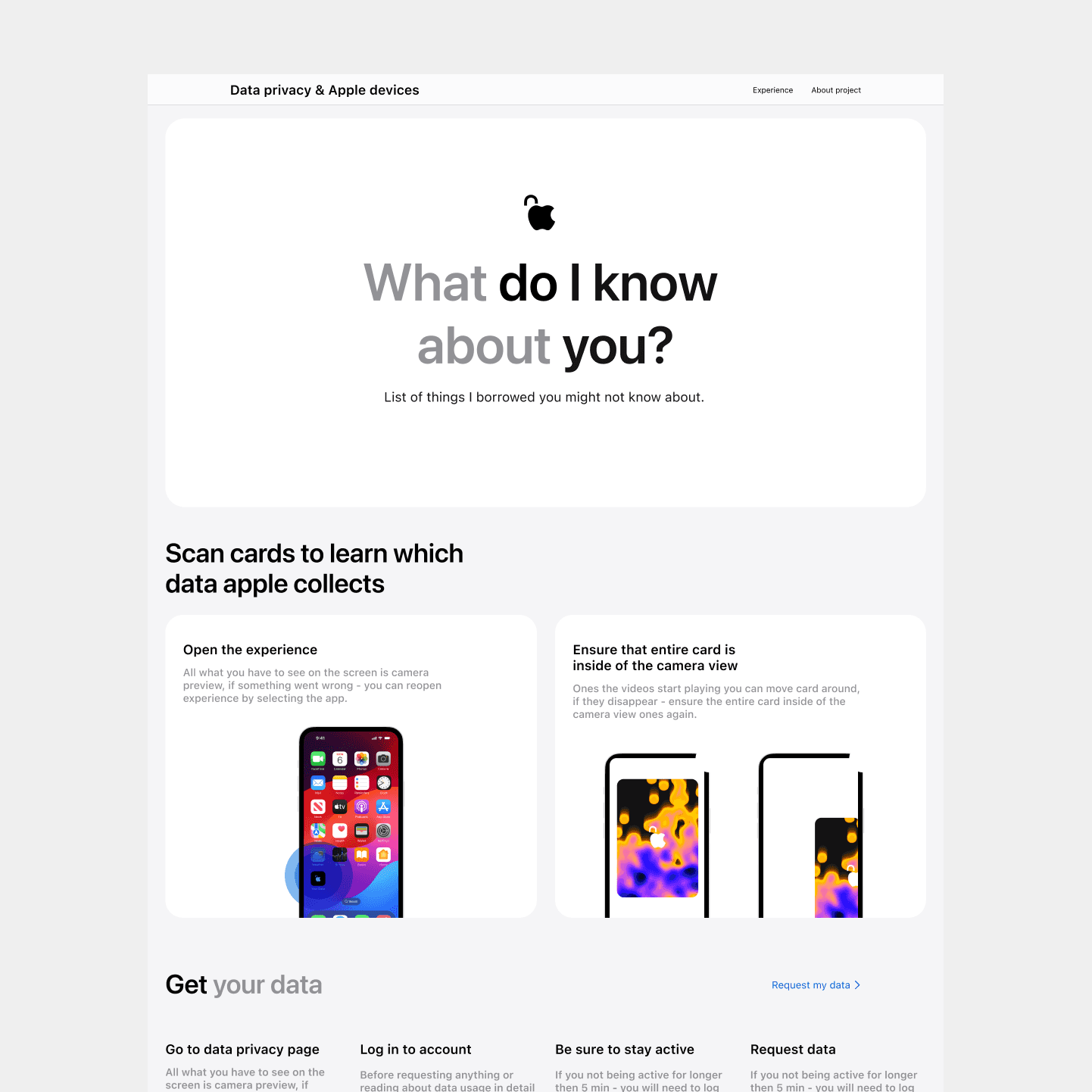
In the course "Data in MacOS" led by Francesca Morini at FH Potsdam, Elizaveta Mirnova, and I created a website and AR experience that uses a MacBook and library-style cards to represent personal datasets accessed by Apple, comparing data collection to borrowing books from a library. On the laptop, visitors find guidance on requesting, understanding, and limiting their data. By scanning the cards with a smartphone, they unlock AR content explaining what each dataset contains, how it is used, and how it can be misused. The cards, together with the intentionally awkward scanning process, make the hidden and often frustrating reality of data access and privacy more visible.